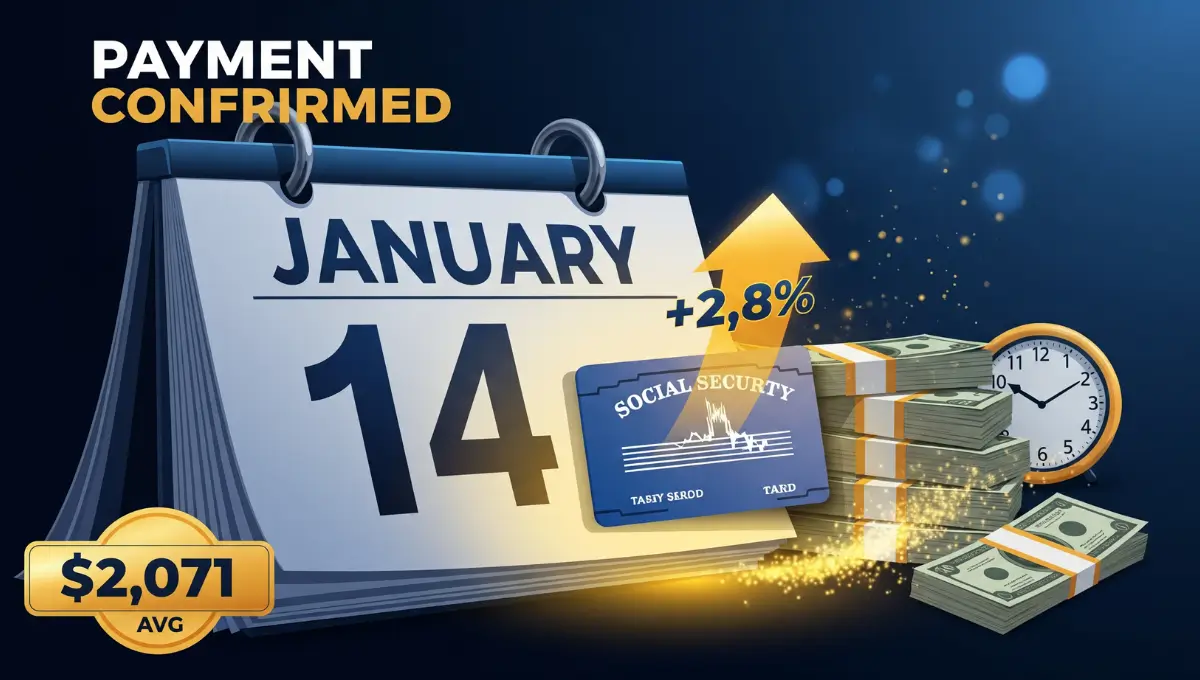

The Social Security Administration has confirmed that millions of Americans will receive their January benefits on Wednesday, January 14, 2026. This marks the first regular payment of the new year with the new cost-of-living increase.
But not everyone gets paid on the same day.
Only recipients born between the 1st and 10th of any month will see their deposit arrive on January 14, according to the SSA’s official payment schedule. This follows the agency’s birth date system that has been in place for decades.
People born on the 11th through the 20th will receive payments on January 21. Those born between the 21st and 31st must wait until January 28.
The January payment includes a 2.8% cost-of-living adjustment, the SSA announced in October 2025. This translates to an average increase of about $56 per month for retired workers, bringing the typical benefit to $2,071.
According to the SSA’s official COLA fact sheet, approximately 75 million Americans will see the raise, including 71 million Social Security beneficiaries and 7.5 million SSI recipients.
Here’s what the average monthly benefits look like in 2026:
- Retired workers: $2,071 (up from $2,015)
- Disabled workers: $1,630 (up from $1,586)
- Aged couple both receiving benefits: $3,208 (up from $3,120)
- Widowed parent with two children: $3,898 (up from $3,792)
Maximum benefits for high earners can reach as high as $5,181 per month for those who delay retirement until age 70, the SSA notes.
But there’s a catch many beneficiaries aren’t expecting.
Medicare Part B premiums jumped to $202.90 per month in 2026, up from $185 in 2025. That’s a $17.90 increase, or nearly 10%. For many seniors, this will eat into their Social Security raise significantly.
The SSA processes nearly all payments electronically now. Paper checks are being eliminated under federal policy, with September 30, 2025 marking the official phase-out date, according to the U.S. Department of the Treasury.
Recipients have two electronic options:
- Direct deposit into a bank account (most common and recommended)
- Direct Express prepaid debit card for those without bank accounts
Direct deposit users should see funds arrive overnight or early morning on their scheduled payment date. Direct Express cardholders typically receive funds the same day, though exact timing varies by bank.
“Direct deposit is over 16 times less likely to be lost, stolen, or delayed compared to paper checks,” the Treasury Department reports.
If your payment doesn’t arrive within three business days of your scheduled date, the SSA advises contacting them immediately for investigation.
Recipients can verify or update their payment information through their my Social Security account online, by phone, or at local SSA offices.
The payment schedule continues throughout January:
- January 2: Those who started benefits before May 1997, or who receive both SSI and Social Security
- January 14: Born 1st–10th
- January 21: Born 11th–20th
- January 28: Born 21st–31st
SSI-only recipients already received their January payment on December 31, 2025, because January 1 was a federal holiday.
The 2.8% increase reflects inflation measured from the third quarter of 2024 through the third quarter of 2025. It’s higher than 2025’s 2.5% adjustment but lower than the historic 8.7% boost given in 2023.
With the new year underway, beneficiaries are encouraged to check their payment dates and ensure their banking information is current to avoid any delays.