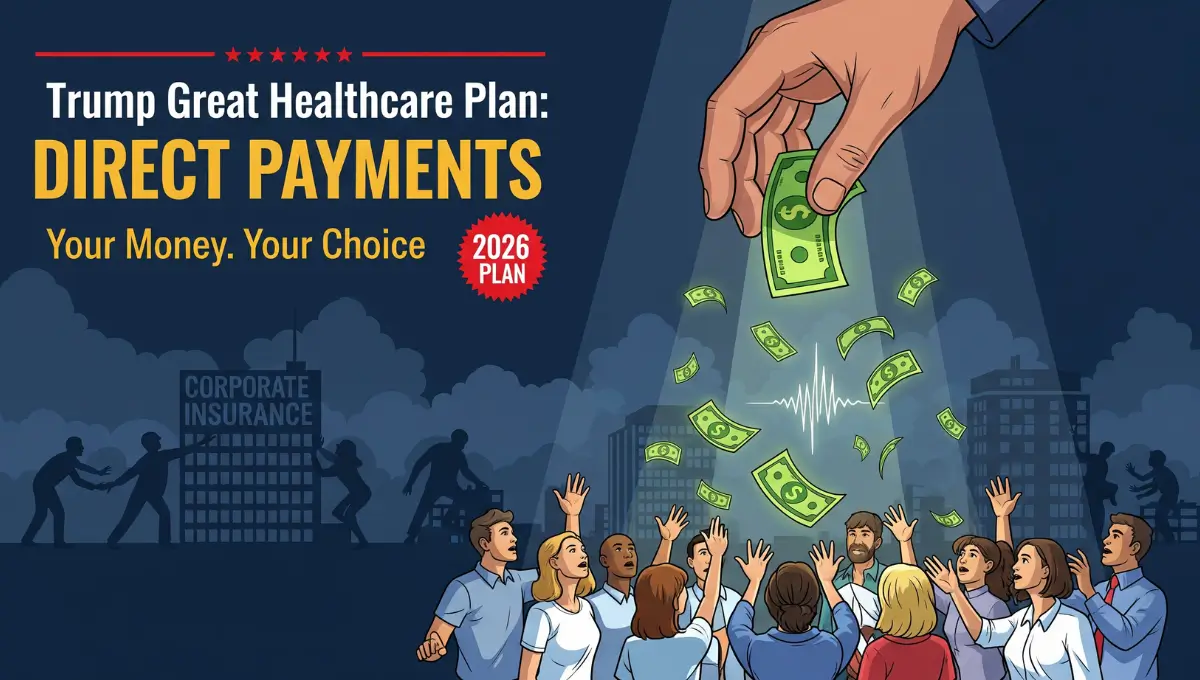

President Donald Trump announced a major healthcare overhaul on January 15, 2026. The plan promises to put billions of dollars directly into Americans’ pockets instead of sending it to insurance companies.
Trump calls it “The Great Healthcare Plan.” It targets high drug prices, hidden insurance fees, and middlemen who drive up costs.
But the plan is not law yet. Congress must vote on it first, and the outcome is uncertain.
What the Plan Promises
Trump’s proposal focuses on five main changes that could affect millions of Americans who rely on Medicare, Medicaid, or private insurance.
First, it bans kickbacks to brokers and middlemen. Pharmacy benefit managers, or PBMs, currently get paid by drug companies to steer patients toward certain medications. Trump’s plan would end those payments to lower premiums.
Second, it locks in massive prescription drug discounts. The plan uses “Most-Favored-Nation” pricing, which means Americans would pay the same low prices that other countries pay for the same drugs. Trump claimed some drugs could cost 80% to 90% less, with prices slashed by “300, 400, even 500%” in certain cases. These discounts would be available through trumprx.gov, according to the White House.
Third, insurers must explain their profits in plain English. Companies would have to publish how much money they spend on actual medical claims versus profits and overhead. They would also show claim rejection rates, appeal outcomes, and wait times on their websites in simple language anyone can understand.
Fourth, hospitals and insurers that take Medicare or Medicaid must post all prices publicly. No more surprise bills or hidden fees. Prices would be displayed prominently in facilities so patients can compare costs before treatment.
Fifth, the government pays you directly. Instead of sending subsidies to insurance companies, the plan redirects taxpayer money into individual health savings accounts. Americans would then shop for their own coverage and keep any savings.
The White House also said the plan would fully fund a program that could cut premiums on common Obamacare plans by 10% to 15% and save taxpayers at least $36 billion, according to Fox Business.
What Trump Said
At a rural healthcare roundtable, Trump framed the plan as a fight against big corporations.
“The big insurance companies lose and the people win… Government pays YOU directly!” Trump said, according to the official White House release.
He added: “Instead of putting the needs of big corporations first, our plan finally puts you first and puts more money in your pocket.”
Trump also urged Congress to act fast. “I’m calling on Congress to pass this framework into law without delay… so that we can get immediate relief to the American people, the people I love!” he said.
The Problems Experts See
Policy experts have raised concerns about how the plan would actually work.
It’s unclear how direct payments would be distributed, who qualifies, or how much individuals would receive. Some fear the plan could destabilize insurance markets if people use the money for cheaper plans that don’t cover pre-existing conditions.
Pharmaceutical companies oppose the drug pricing rules, arguing they could harm research and innovation. Insurers have mixed reactions but say they’re open to transparency measures.
Congress is divided. Republicans disagree on details, and Democrats are expected to oppose the plan. That means passage is far from guaranteed.
ABC News reported that some provisions in the plan overlap with existing Affordable Care Act rules, which may limit new impact.
What Happens Next
As of January 19, 2026, this is only a proposal. No vote has been scheduled.
The plan builds on Trump’s first-term efforts, including earlier price transparency rules and drug pricing orders. But turning the framework into law could take months — or longer.
For now, Americans should watch Congress closely. If the plan passes, it could reshape how millions pay for healthcare. If it doesn’t, costs may stay the same.
Full details are available at the official White House fact sheet: whitehouse.gov/greathealthcare.